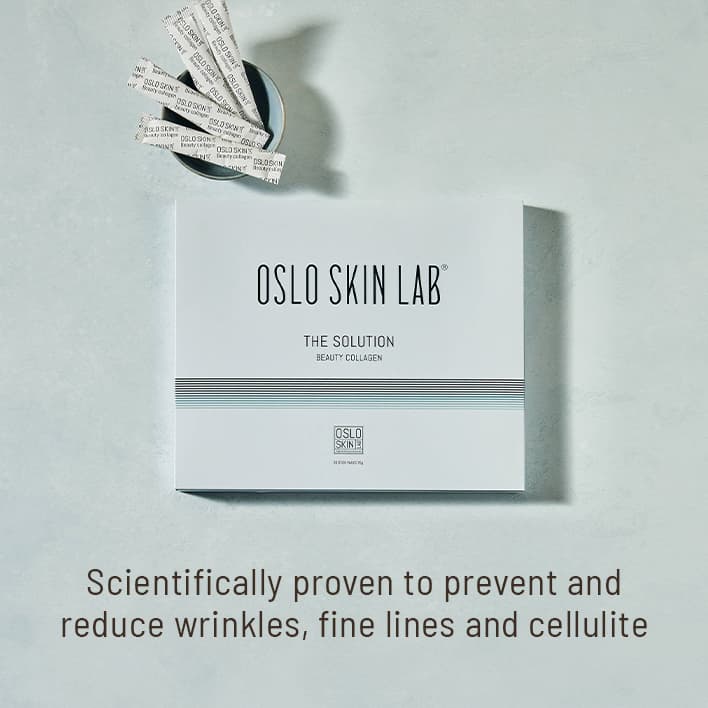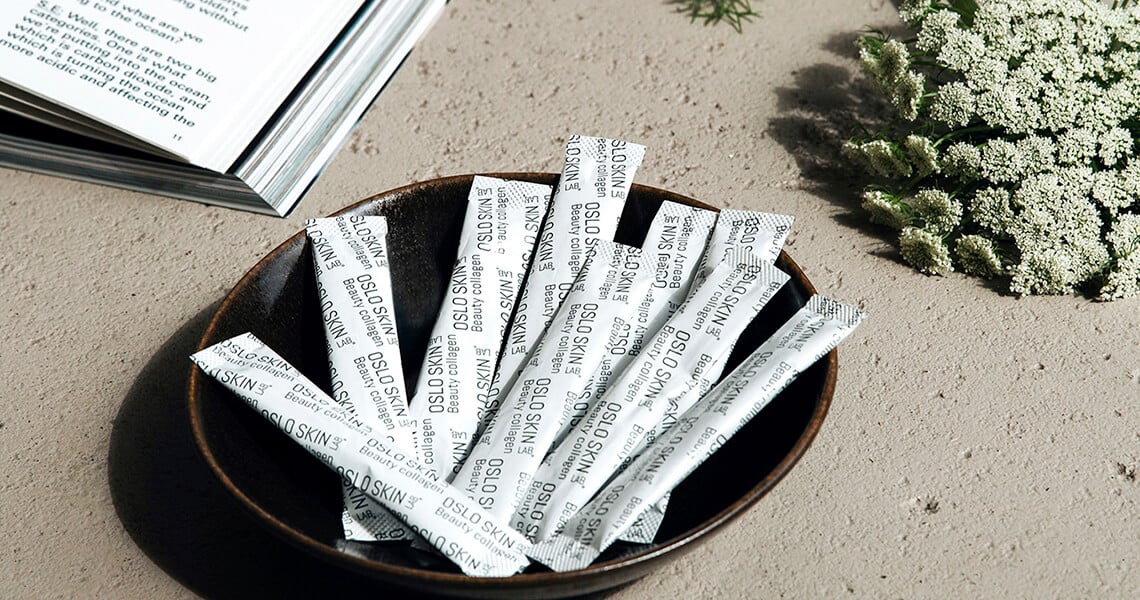
Debunking collagen myths
Collagen seems to be a trend in skincare, although opinions on it are often divided. In this article, we’ve gathered the most common questions about collagen and answered them: here’s everything you need to know!
Let’s start with the basics: what exactly is collagen?
Collagen is a protein naturally found in the body. It is the skin’s most important building block and a key factor in preventing wrinkles and maintaining elasticity. In young skin, collagen can make up to 80% of its structure.
So, if the body produces collagen naturally, what’s the point of collagen products?
Around the age of thirty, collagen levels begin to decline by 1-2% per year, and the skin’s ageing process accelerates. This shows up as fine lines, deeper wrinkles, and a loss of volume and firmness.
Okay, so we need more collagen?
Yes, if you want to keep your skin looking youthful and firm for longer!
However, not all types of collagen are effective. For example, while protein-rich foods contain collagen, simply increasing protein intake is not enough to make your skin smoother. Studies have shown that only hydrolysed collagen - that is, collagen broken down into peptides of a specific length - can provide significant benefits when taken daily as a supplement.
Collagen creams can also improve the appearance of the skin, but they only work on the outermost layers. For a fuller, longer-lasting effect, collagen needs to be taken orally.
…peptides?
Peptides are small chains of amino acids, the “building blocks” of proteins. These fragments have specific functions in the body, such as stimulating collagen production. The hydrolysing process is what creates these peptides: it breaks down complex molecules like collagen into smaller parts that can be easily absorbed by the body.
So the effects of collagen are scientifically proven - but can these studies be trusted?
You can start by checking the studies conducted on hydrolysed collagen here.
It’s worth noting that these studies were conducted according to the so-called “gold standard.” This means they are:
- Placebo-controlled
- Double-blind
- Randomised
- Peer-reviewed
- Published in medical databases
A study is placebo-controlled when the group receiving the active ingredient is compared with a group receiving a placebo (in this case, a powder containing no active ingredient). This ensures that the measured effect is due to the active ingredient, not other factors such as smoking, sun exposure, other cosmetics, lack of sleep, or stress.
When both participants and researchers analysing the results do not know who received the active substance or placebo, the study is double-blind. Participants are also randomly assigned to groups, ensuring that results cannot be influenced consciously or unconsciously.
Independent researchers who were not involved in the study later review the documents, providing peer review of the methodology and findings. Publication in a database further ensures that quality standards are met.
So what do these studies actually show?
In one study, the depth of fine lines and wrinkles was reduced by up to 20% (specifically 20.1%) over eight weeks, with a daily dose of 2.5 g of Verisol® collagen or placebo. In another study, skin elasticity improved by 15% in just four weeks.
Adding a collagen supplement to your diet is not an overnight miracle cure; results take time. However, if you stick with it, the evidence suggests that simply adding a daily dose of collagen to your morning coffee can lead to noticeably firmer, smoother skin within a few months.
Silke’s experience
Silke Grane, a Danish influencer and Oslo Skin Lab Ambassador, wanted to be sure she recommended a reliable product to her followers. The Oslo Skin Lab team contacted May-Britt Morad, a specialist at a renowned skincare clinic in Oslo, Norway. Morad’s clinic uses a machine that scans skin quality and measures wrinkle depth.
Silke, along with randomly selected participants, agreed to have her skin tested before and after eight weeks of using The Solution™. The results were impressive.
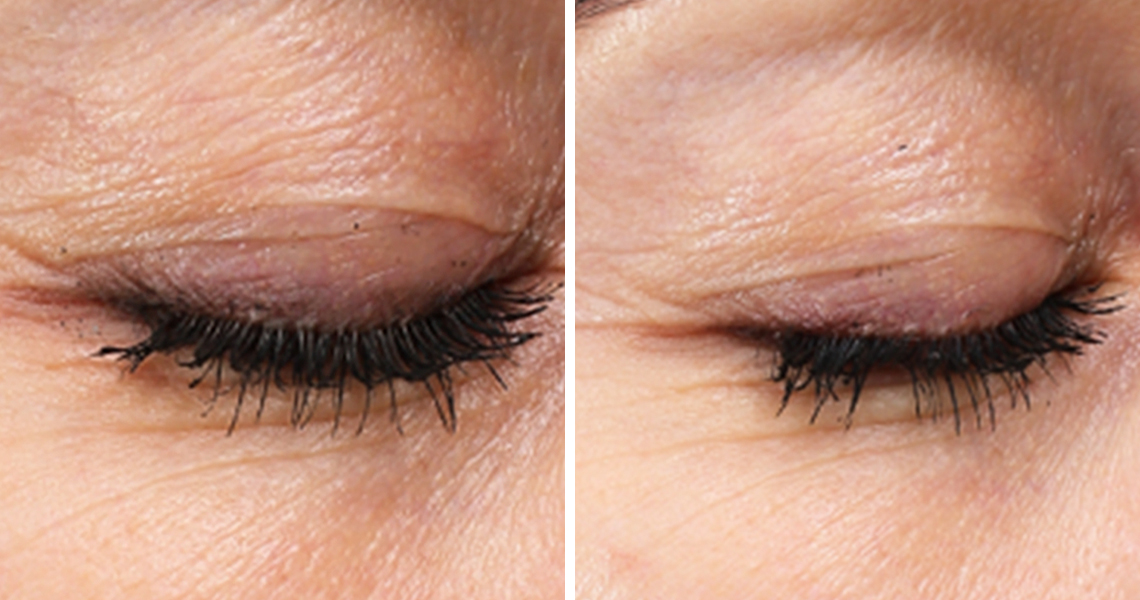
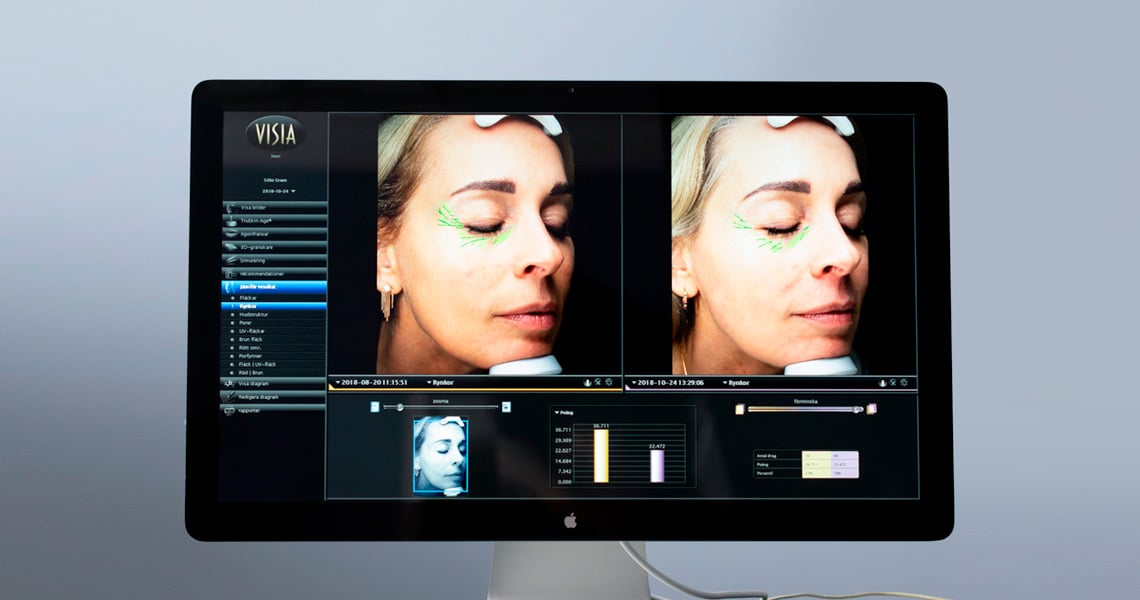
After eight weeks, a skin scan showed a reduction in Silke’s wrinkle depth by up to 51%.
Her skin was scanned again after one year, showing continued improvement, this time an 18% reduction. The second scan also confirmed improvements in skin texture, including smaller pores and a decrease in the depth of fine lines around the eyes.
Who is collagen suitable for?
Because collagen peptides are structurally very similar to the collagen naturally found in the body, taking a collagen supplement is a very natural way to help maintain a youthful appearance. Benefits are greatest for people over 30, although some choose to take it preventively. It is suitable for all skin types. Collagen peptides have no documented side effects, and collagen itself contains no allergens.
However, be cautious with different products on the market. The Solution™ Beauty Collagen contains just one ingredient: 100% collagen, with no additives or preservatives, and it is gluten- and lactose-free, making it safe even for those with allergies.
Does this mean eternal youth?
Let’s be realistic: taking a collagen supplement will not undo the effects of an unhealthy lifestyle. Smoking, poor sleep, and a poor diet will inevitably show on your skin regardless. Additionally, The Solution™ is not intended to replace other skincare essentials, such as regular cleansing, moisturising, and sun protection.
The power of our collagen powder lies in treating skin from the inside out, giving an extra boost compared with topical treatments like creams and serums, which only work where applied.
Study results show real improvements in skin firmness, softness, and elasticity. There’s nothing wrong with having wrinkles or signs of ageing - collagen supplements are not intended to erase them completely. But if your goal is to look your best at any age and age slowly and gracefully, a hydrolysed collagen supplement like The Solution™ Beauty Collagen from Oslo Skin Lab is an excellent addition to your beauty routine.
Explore related articles:
→ Collagen vs cellulite: what you need to know to take care of your skin
→ Everything you need to know about collagen